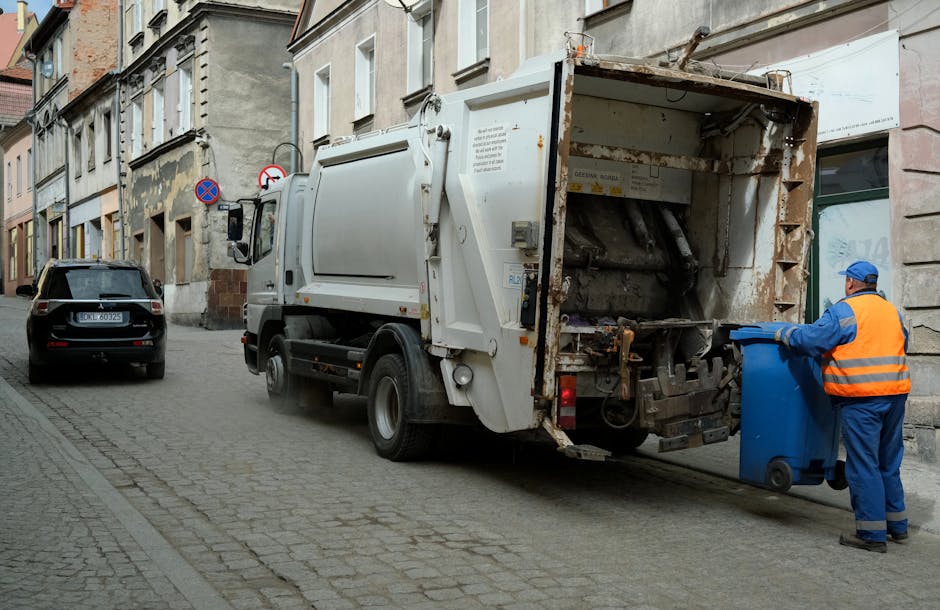
How much does rubbish removal cost in Chislehurst BR7?
If you are staring at a pile of bagged-up clutter, old furniture, builders' rubble, or garden waste and wondering how much does rubbish removal cost in Chislehurst BR7, you are not alone. Most people want a straight answer, but the real cost depends on a few very ordinary things: how much waste there is, what it is made of, how easy it is to collect, and whether any items need special handling. In other words, the cheapest job on paper is not always the cheapest in real life.
This guide breaks down rubbish removal pricing in plain English, so you can judge quotes properly, avoid nasty surprises, and choose the right service for your situation. It also covers what happens on the day, what affects the price, how to compare options, and the small details that often get overlooked until the van is already outside.
Key takeaway: rubbish removal in Chislehurst BR7 is usually priced according to volume, weight, labour, access, and disposal type. A tidy quote is only helpful if it clearly explains what is included.
Table of Contents
- Why rubbish removal cost matters in Chislehurst BR7
- How rubbish removal pricing works
- Key benefits and practical advantages
- Who this is for and when it makes sense
- Step-by-step guidance
- Expert tips for better results
- Common mistakes to avoid
- Tools, resources and recommendations
- Law, compliance, standards, or best practice
- Options, methods, and cost comparison
- Case study or real-world example
- Practical checklist
- Conclusion
- Frequently asked questions
Why How much does rubbish removal cost in Chislehurst BR7 Matters
Cost matters because rubbish removal is one of those jobs where the difference between a sensible price and an awkward one can be surprisingly large. If you are clearing a flat in BR7, emptying a garage, or getting rid of bulky items after a move, the final bill may include more than just the lift-and-load service. Access down a narrow side passage, parking restrictions, mixed waste, or a last-minute extra sofa can all change the number on the invoice.
In a place like Chislehurst, that can matter even more than people expect. Streets can be tight, parking can be fiddly, and some homes have lofts, basements, garden routes or shared entrances that add time. Truth be told, the easiest quote to understand is often the one that asks the right questions before the job starts.
It also matters because rubbish removal is not just about getting rid of "stuff". A good service should also handle sorting, reuse where possible, recycling, and responsible disposal. That is why many customers compare more than price. They want speed, convenience, reliability, and the peace of mind that the waste is being dealt with properly.
If you are comparing services for larger clearances, it can help to look at the specific type of job too, such as house clearance, flat clearance, or garden clearance. Different waste streams are handled differently, and that has a direct effect on cost.
How How much does rubbish removal cost in Chislehurst BR7 Works
Most rubbish removal quotes are built from a few core pricing factors. Some companies price by van load, some by cubic yards or cubic metres, and others by a combination of labour plus disposal. There is no single universal method, which is one reason prices can look a bit inconsistent at first glance.
Here is the basic logic behind the price:
- Volume: the more space your waste takes up, the more it usually costs.
- Weight: heavy waste can cost more to dispose of, especially if it includes soil, rubble, bricks, or tiles.
- Waste type: mixed household rubbish, green waste, furniture, and builders' waste are not treated the same way.
- Labour: if items must be carried from an upper floor, down stairs, or through a long access route, the job takes longer.
- Access and parking: tight access, permit issues, or distance from the collection point can all add time.
- Special handling: certain items may need extra care or separate processing.
Think of it like ordering removal of a pile, not just a bag count. Two jobs can look similar from the pavement and still be very different once the team starts lifting. A single heavy wardrobe, for example, may be more awkward than six black bags if it has to be taken from a top-floor bedroom with no lift. The van does not care how tidy your pile looks; the labour does.
For business customers, the pricing logic can shift slightly. Office desks, filing cabinets, archived paperwork, and IT waste often need organised sorting and controlled disposal. If you are dealing with commercial waste, the dedicated business waste removal page is a useful place to start.
Typical price-building factors you should ask about
- What exactly is included in the quote?
- Is loading labour included or charged separately?
- Are there extra costs for stairs, distance, or parking?
- Will the quote change if the load is mixed rather than sorted?
- Are disposal and recycling fees included?
- Is there a minimum charge for smaller jobs?
These questions are not fussy. They are practical. And they can save you from a quote that looks fine until the crew turns up and says, "Actually, that extra pile counts too."
Key Benefits and Practical Advantages
Once you understand the pricing, it becomes easier to see why professional rubbish removal is often worth it. Yes, you can hire a skip or make multiple trips to the tip, but that is not always the cheapest route once you factor in your own time, fuel, parking, lifting, and effort.
The main benefits are straightforward:
- Speed: the waste can often be removed in one visit.
- Convenience: you do not have to sort out transport or do the heavy lifting yourself.
- Cleaner finish: the area is left clear, which is especially helpful after decorating, gardening, or moving out.
- Flexible loading: mixed loads can often be handled more easily than with a skip.
- Less disruption: there is usually no need to reserve a parking space for a large container for days on end.
There is also a subtle but important benefit: better judgement. A professional team can often spot whether your waste is better classified as household rubbish, furniture, builders' waste, or green waste. That matters because a correctly sorted load may be cheaper to dispose of than a mixed one. It is one of those boring details that makes a real difference.
For a lot of homeowners, the best value is not the lowest sticker price. It is the quote that gets the job done without dragging out the process. If you have ever spent a Saturday driving back and forth with a boot full of junk, you will know exactly what I mean. By the third trip, the whole thing starts to feel a bit ridiculous.
And if you are dealing with old sofas, tables, wardrobes, or mattresses, a dedicated furniture disposal service or furniture clearance option may be more practical than general rubbish removal, especially where heavy lifting is involved.
Who This Is For and When It Makes Sense
This kind of service suits anyone who has more waste than they can reasonably handle themselves, or waste that is too bulky, awkward, or mixed to deal with easily. That includes homeowners, landlords, letting agents, renters, builders, shop owners, office managers, and people clearing a property after a life change.
Common scenarios include:
- End-of-tenancy clear-outs
- Garage or loft decluttering
- Garden tidy-ups after pruning or landscaping
- Office moves and desk replacements
- Pre-sale or post-sale property clearances
- Light builders' waste after renovation
- Inherited property clearances
A lot of customers only really need rubbish removal once they are already overwhelmed. That is normal. The pile grows quietly in the corner until one day it feels like it has a personality. For some people it is a couple of broken chairs and old boxes. For others it is a whole room, and a bit of a sigh. Either way, the service makes sense when time, access, or disposal rules make self-clearance more effort than it is worth.
If your job is more about a specific space than general rubbish, the dedicated pages can help you match the service to the task. For example, garage clearance works well for storage-heavy spaces, while loft clearance is more suitable when access is awkward and items are lighter but numerous.
Step-by-Step Guidance
If you want to keep your costs sensible, a little preparation goes a long way. You do not need to sort every screw and screwcap, but you do want to give the provider clear information before they quote.
1. Identify what needs removing
Make a rough list of the items or waste piles. Is it mainly bags, furniture, green waste, or builders' debris? If the job includes mixed waste, say so. Mixed loads are common, but they need a quote that reflects the true disposal mix.
2. Estimate the amount
Use simple comparisons if that helps: a few bin bags, half a van, a full van, or a small room's worth of items. Photos are often useful because they show scale better than a quick verbal description. A couple of wide-angle pictures can save a lot of back and forth.
3. Check access
Think about stairs, gates, shared hallways, parking, and walking distance from the property to the vehicle. These details matter more than people expect. In Chislehurst BR7, narrow drives or busy residential roads can mean the crew needs a little extra time to load safely.
4. Separate anything special
Keep aside anything that may need separate handling, such as paint tins, fridges, mattresses, electrical items, or heavy rubble. Do not worry if you are unsure. Just flag the items so the quote can be accurate.
5. Ask for a clear quote
A good quote should explain the scope of work, what is included, and what might change the price. If a quote is vague, ask for clarification before booking. It is much easier to ask in advance than to negotiate at the kerbside. Nobody enjoys that chat.
6. Prepare the area
Move smaller items together, clear a path, and make sure the team can get to the waste without unnecessary delays. If the job is inside a home, leave the rooms accessible. This small step often reduces labour time and helps the crew work more efficiently.
7. Confirm the end result
Before the van leaves, check that everything you wanted removed has gone and that the area is left tidy. A quick walk-through is a sensible habit. Five minutes here can prevent awkward surprises later.
Expert Tips for Better Results
There are a few habits that consistently help keep rubbish removal costs under control. Nothing flashy. Just the kind of common-sense things experienced customers quietly do.
- Send clear photos. Good photos reduce quote errors and often speed up the booking process.
- Group waste by type. If your waste is already roughly separated, the job is easier to assess.
- Be honest about access. It is better to mention the steep driveway now than explain it later.
- Compare like with like. One quote may include loading, disposal, and recycling; another may not.
- Book in good time. Urgent same-day jobs can sometimes cost more, especially at busy times.
- Think about reuse. Items in good condition may be better moved through a reuse or donation route, where appropriate.
A neat little trick: if you are clearing multiple areas, get the provider to quote the whole job in one go rather than as separate visits. That can be more efficient. It also avoids paying a minimum charge more than once, which is not ideal, to be fair.
And if you are also weighing up whether the job is really a rubbish removal task or more of a full property clearance, look at home clearance or house clearance for larger clear-outs. Matching the service to the workload is half the battle.
Common Mistakes to Avoid
Most pricing mistakes are avoidable. They usually come from guessing, rushing, or assuming all waste is treated the same way. The result? A quote that sounds great until the job turns out to be a different beast entirely.
- Underestimating the load size. What looks like "a bit of rubbish" can become a much larger pile once it is all brought together.
- Forgetting about access issues. A second-floor flat with no lift is not the same as a front-drive collection.
- Mixing waste types without telling anyone. Builders' waste, furniture, and garden debris can have different disposal routes.
- Ignoring heavy items. Soil, rubble, and wet green waste can weigh far more than expected.
- Accepting vague pricing. If the quote is too broad, you may end up paying for things you did not plan for.
- Leaving everything to the last minute. Urgency is expensive. Not always, but often enough.
One of the more common mistakes is assuming that a single large item should cost "hardly anything" to remove. In reality, a bulky item often still needs two people, a vehicle, fuel, disposal, and sorting. A battered wardrobe does not look expensive, but it behaves like one on the stairs.
If you are dealing with renovation debris, it is worth checking the dedicated builders' waste clearance option, because construction waste has different handling and disposal expectations from general household rubbish.
Tools, Resources and Recommendations
You do not need specialist tools to get a decent quote, but a few simple things help enormously:
- Phone camera: take clear photos from a few angles.
- Room-by-room list: especially useful for larger clearances.
- Approximate measurements: helpful if you know the size of a sofa, wardrobe, or waste pile.
- Access notes: steps, parking, gates, lifts, and loading distance.
- Sorting boxes or bags: useful if you want to separate general waste from recyclables.
For customers who care about what happens after collection, it is sensible to ask about recycling and reuse. A responsible provider should be able to explain how waste is sorted and what steps are taken to reduce landfill where possible. If you value that part of the process, take a look at the company's recycling and sustainability approach as part of your decision-making.
Another useful page is pricing and quotes, which is where many people start when they want a clearer sense of how estimates are put together. If payment matters to you, it also helps to understand payment and security before you confirm anything, especially on larger jobs.
Law, Compliance, Standards, or Best Practice
When rubbish is removed, there is more involved than just throwing things in a van. Responsible waste handling means considering segregation, transport, disposal, recycling, and the duty of care around where waste ends up. You do not need to know every technical detail as a customer, but it is wise to choose a provider that takes compliance seriously.
In practical terms, that means the team should:
- handle waste safely and professionally
- avoid fly-tipping or careless dumping
- use lawful disposal routes
- separate recyclable materials where reasonable
- take care with hazardous or restricted items
There are also safety expectations around lifting, carrying, and moving bulky waste. A good crew should work in a way that reduces damage to property and lowers the chance of injury. That sounds obvious, but in the real world it is worth mentioning. A front door with fresh paint and a heavy settee do not always get along.
If you want extra reassurance, the company's insurance and safety information should make it easier to understand how risks are managed. For service standards and how concerns are handled, the complaints procedure can be a useful indicator of how seriously customer issues are taken. And if you are simply comparing how the business presents itself, the about us page helps you judge whether the operation feels credible and properly set up.
For readers who like to dig into the fine print, policy pages such as terms and conditions, privacy policy, and the health and safety policy can help set expectations before booking. That is not exciting reading, admittedly, but it is useful.
Options, Methods, or Comparison Table
There are a few different ways to deal with rubbish in Chislehurst BR7, and the best one depends on volume, urgency, and how much lifting you want to do yourself.
| Option | Best for | Typical strengths | Possible drawbacks |
|---|---|---|---|
| Professional rubbish removal | Mixed waste, bulky items, quick clearances | Fast, convenient, labour included | Can cost more than self-help for tiny loads |
| Skip hire | Longer projects, ongoing DIY or renovation work | Good for gradual loading, useful for builders' waste | Requires space, permits may be needed, loading is on you |
| Self-haul to disposal site | Small loads and people with a suitable vehicle | Can be budget-friendly if you have time | Fuel, time, lifting, queues, and multiple trips |
| Specialist item removal | Single bulky items, furniture, appliances | Simple for one-off collections | Not ideal for mixed or larger clearances |
As a rule of thumb, rubbish removal tends to win on convenience. Skip hire can win on flexibility for ongoing work. Self-haul can be cheapest if you have a van, time, and the stamina to do the legwork. But if your waste is heavy, mixed, or awkward, the "cheap" route can end up feeling expensive by the end of the day.
For property or room-specific jobs, a more tailored service is often the better fit. That includes office clearance for workspaces and garage clearance for household storage areas that have become a bit of everything, really.
Case Study or Real-World Example
Here is a realistic example. A Chislehurst homeowner clears out a garage after years of accumulating old boxes, broken shelving, a couple of chairs, mixed bags, and a rusted treadmill that nobody has used since the summer before last. On first look, it seems like a small-to-medium job. Once everything is grouped together, it fills far more space than expected.
The first quote is based on photos and a rough description. The provider asks about access, whether there is parking nearby, and whether the heavy items are already separated. The homeowner mentions that the garage is at the back of the house, with a narrow path and a few steps. That detail changes the labour estimate a little, but not dramatically. A fair quote follows, and the crew removes everything in one visit.
What made the difference? Clear information. No guessing. No "oh, we forgot about that pile". No awkward back-and-forth on the day. The job is completed quickly, the garage is left swept out, and the homeowner can finally park the car where the treadmill used to live. A small victory, but a satisfying one.
That same logic applies to many jobs in BR7. A loft clearance might seem straightforward until the hatch is small and the stairs are steep. A garden clearance may look neat until wet soil, branches, and old sleepers reveal themselves as heavier than they looked in the rain. You get the idea.
Practical Checklist
Use this checklist before booking a rubbish removal service in Chislehurst BR7:
- List the main items or waste types
- Take a few clear photos
- Estimate the volume as accurately as you can
- Note stairs, narrow access, or parking issues
- Separate special items if possible
- Ask what is included in the quote
- Confirm whether labour and disposal are covered
- Ask about recycling and reuse
- Check payment expectations in advance
- Make sure you know what will happen on arrival
If you go through those points calmly, you will usually end up with a much better quote and a less stressful collection day. It is simple, but it works. Most of the time, that is enough.
Conclusion
So, how much does rubbish removal cost in Chislehurst BR7? The honest answer is that it depends on the amount, weight, access, waste type, and how much labour the job needs. A small, straightforward collection can be relatively modest, while a bulky mixed-load clearance with poor access will naturally cost more. Once you understand those moving parts, the pricing makes a lot more sense.
The best approach is to gather a few photos, think through access, and ask for a quote that spells out exactly what is included. That way you are comparing proper prices, not just numbers on a screen. And if the work is tied to a specific task such as a loft, garage, office, or garden clear-out, matching the service to the job can make the whole process smoother and better value.
Get a free quote today and see how much you can save.
With the right information, rubbish removal does not have to feel like a headache. It can be one of those rare jobs that gets lighter the moment you decide to deal with it.
Frequently Asked Questions
How much does rubbish removal usually cost in Chislehurst BR7?
It varies depending on the volume of waste, how heavy it is, and whether the job includes labour, access challenges, or special disposal needs. A small tidy load will usually cost less than a mixed clearance with bulky items.
Is rubbish removal cheaper than skip hire?
Not always. Skip hire can be cost-effective for ongoing DIY or renovation work, while rubbish removal is often better value when you want labour included and the waste taken away in one visit.
Do I need to sort the rubbish before collection?
It helps if you can separate obvious items such as furniture, garden waste, and builders' debris, but you do not usually need to sort everything perfectly. Just be clear about what is there so the quote is accurate.
Can I get a quote from photos?
Yes, photos are often one of the easiest ways to get a realistic estimate. A few pictures from different angles usually give a much better idea than a quick description alone.
Why do prices change between different rubbish removal jobs?
Because not all waste is equal. Heavy rubble, awkward furniture, wet garden waste, and mixed loads all affect disposal costs and labour time differently.
What should be included in a good rubbish removal quote?
A clear quote should explain the waste types covered, whether loading is included, any access assumptions, disposal costs, and any extra charges that may apply if the job changes.
Do I pay more if my property has stairs or difficult access?
Often, yes. If the team has to carry waste further, use stairs, or deal with tight access, the job can take longer and may cost more.
Can rubbish removal handle furniture as well as general waste?
Usually yes, but bulky furniture may be better handled as part of a dedicated furniture removal or clearance job, especially if there are several large items.
Is garden waste priced differently from household rubbish?
It can be. Garden waste such as branches, soil, and green cuttings may be priced differently because it has different disposal and weight characteristics.
How can I keep the cost down?
Give accurate information, send photos, group items together, be clear about access, and avoid last-minute additions. A tidy, honest brief is usually the best way to keep prices sensible.
What if I have builders' rubble or renovation waste?
Say so upfront. Builders' waste is often heavier and more specialised than normal household rubbish, so it should be quoted separately or under a suitable clearance service.
How do I know if a company is trustworthy?
Look for clear pricing, sensible explanations, proper policies, and a straightforward process. Pages such as about us, terms and conditions, insurance and safety, and recycling information can help you judge whether the business is well run.
If your next step is to compare your options properly, start with the waste type, the access, and the amount you need removed. Get those three things right, and the rest usually falls into place. And that, honestly, saves everyone a lot of faff.